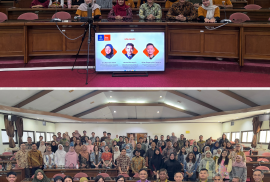
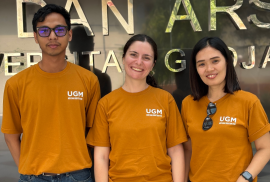
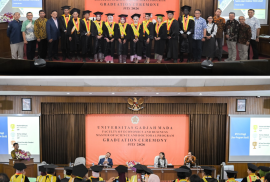
On Tuesday, May 19 2026, the Master of Science and Doctoral Program (MD) of the Faculty of Economics and Business Universitas Gadjah Mada (FEB UGM) organized a guest lecture entitled “Workshop Research Method” featuring Dr. Michal Lemanski, Senior Lecturer in the Department of Marketing at the WU Vienna, as the keynote speaker. The guest lecture was conducted offline from 09.30 AM to 11.30 AM WIB at the Lippo Room, 2nd Floor, Master of Science and Doctoral Building FEB UGM.
The session focused on common mistakes in experimental research, particularly the tendency of researchers to emphasize only statistically significant findings. Dr. Michal explained that leading journals increasingly encourage more comprehensive reporting of research results, including non-significant findings, in order to provide a more complete scientific understanding and support future research development. In addition, he highlighted the importance of accurately measuring dependent variables. Complex constructs, such as investment intention or intention to recommend a company, must be clearly defined and properly measured to truly represent the concepts being studied. Inappropriate measurements may affect research validity; therefore, researchers need to ensure that the indicators used align with the objectives of the study.
The session also discussed the validity and limitations of field experiments. Dr. Michal explained that field experiments are valuable because they are closely related to real-world contexts, but they often face challenges related to access, cost, and limited control over variables. In strategic management research, for example, conducting experiments involving multinational company CEOs is extremely difficult due to limited access and time constraints. Therefore, researchers need to carefully consider whether their proposed research design is more suitable for field settings or controlled laboratory environments.
Furthermore, Dr. Michal emphasized that experimental research should not focus solely on statistical significance, but should also explain the context of the data, the reasons why certain variables may not show significant effects, and the implications for future research. By doing so, researchers can build research narratives that are more honest, reflective, and valuable for theory development. The session was conducted interactively through discussions on the criteria for selecting field experiments, challenges of generalization, and the role of experiments in theory development. Through this activity, students are expected to gain a deeper understanding of the importance of rigorous experimental design, accurate measurement, and transparent reporting in producing high-quality business and management research.